Business Class vs Economy Cost: What You Actually Pay in 2026
The business class vs economy cost gap is wider than most travelers expect. On a round-trip flight between New York and London, an economy ticket might set you back $450 to $900, while a business class seat on the same aircraft routinely prices out between $2,800 and $6,500. That is not a small premium. It is a four-to-sevenfold jump, and it is usually the single biggest line item after you have picked your destination.
Part of what makes the comparison tricky is that neither price is fixed. Airlines use dynamic pricing and fare buckets, so two people on the same flight can pay wildly different amounts depending on when they booked, how full the cabin is, and how many seats are left. A business class fare you see today for $3,200 could be $5,100 next week or $1,900 in a sale next month.
This guide breaks down what you actually pay for each cabin, what the upgrade buys you, and the honest math of when it is worth spending the extra money.
How Much More Does Business Class Actually Cost?
As a rule of thumb, expect to pay two to five times the economy fare for business class, with long-haul international routes sitting at the top of that range and short domestic hops at the bottom.
- Transatlantic (US to Europe): economy round-trip $500–$1,200; business class $2,800–$7,000.
- Transpacific (US to Asia/Australia): economy round-trip $800–$1,600; business class $4,500–$11,000.
- US domestic coast-to-coast: economy round-trip $250–$600; first/business $800–$2,200.
- Premium economy (the middle rung): usually 1.5 to 2.5 times economy, or $900–$2,000 on long-haul routes.
The premium also varies a lot by airline. Full-service carriers such as Emirates, Qatar Airways, and Singapore Airlines charge a meaningful premium for their flagship business cabins, while budget-minded carriers and older wide-body aircraft sometimes drop business fares closer to two times economy during off-peak periods.
The single cheapest way to close the gap is almost always an upgrade, not a straight purchase. Cash upgrades offered at check-in are frequently 30% to 60% cheaper than buying the seat outright, which is why the best time to book flights matters more than you might think.
What the Extra Money Actually Buys You
Photo by Max Chen via Pexels
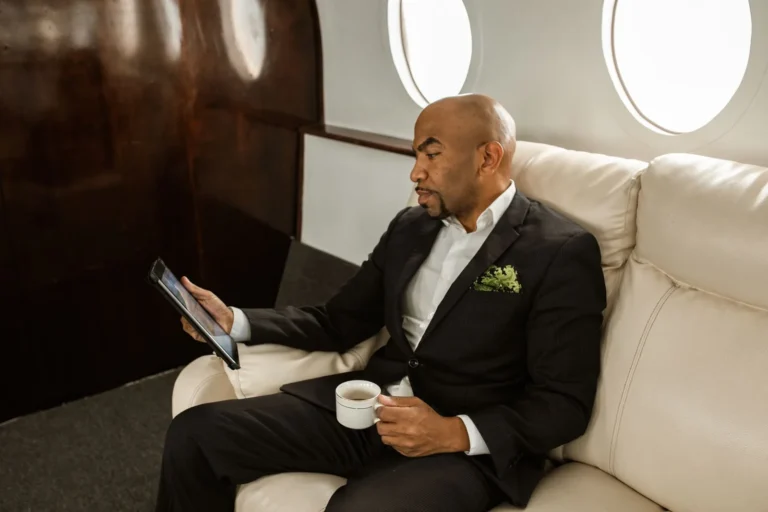
The gap is not just a bigger price tag. Business class changes the physical experience of flying in ways economy cannot.
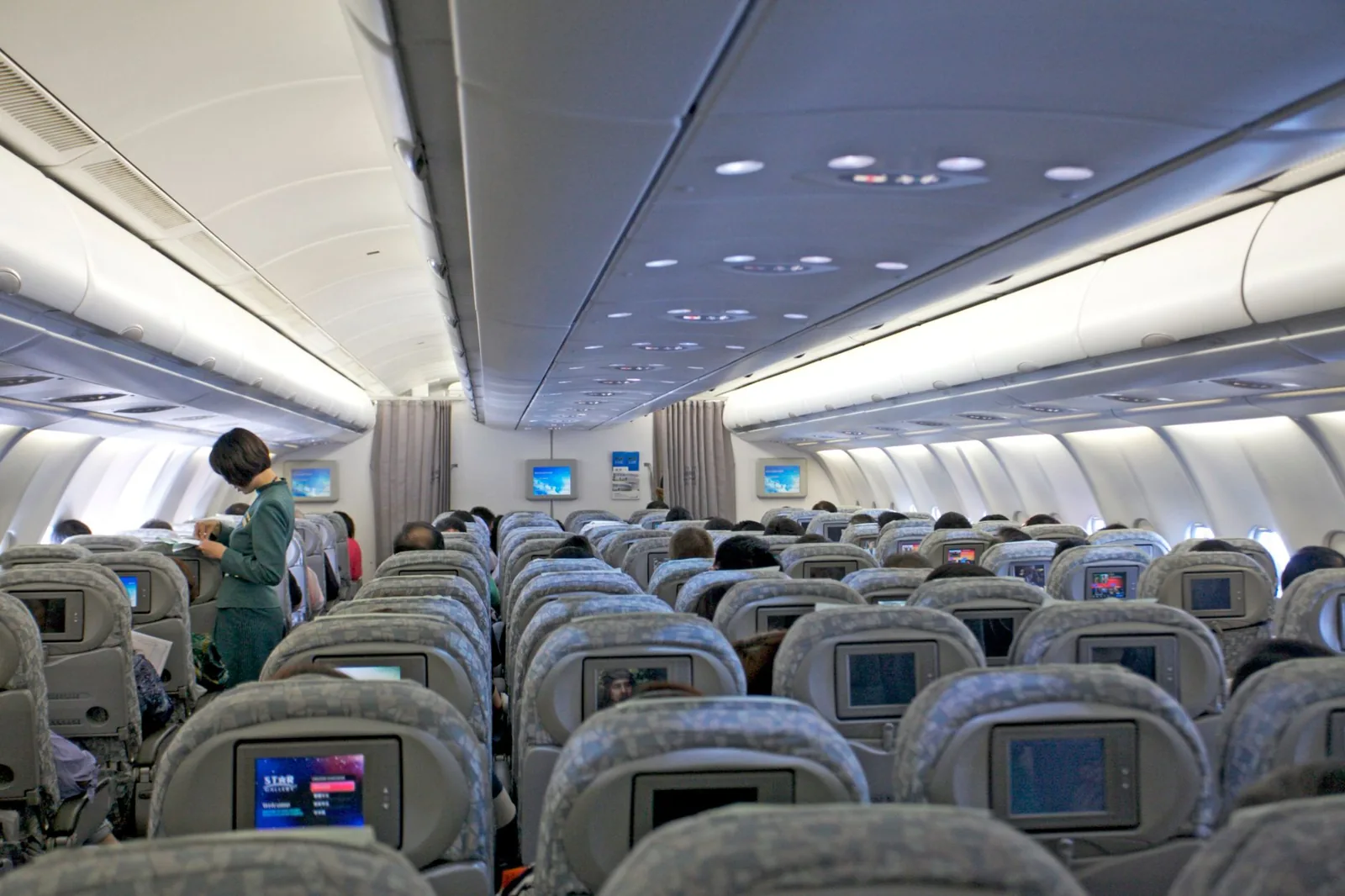
- Seat: a lie-flat bed on long-haul routes versus a 17–18-inch-wide economy seat with 30–32 inches of pitch. You arrive able to sleep, not stiff from a 12-hour upright doze.
- Food and drink: multi-course meals served on demand, restaurant-style, versus a single tray meal on a timer. Premium wine, spirits, and barista coffee are standard.
- Lounges: airport lounge access before the flight and on connections, with showers, quiet space, and real food replacing the food-court gate squat.
- Baggage: two to three checked bags at higher weight allowances (often 32 kg each) versus one or two bags of 23 kg.
- Priority everything: dedicated check-in, fast-track security, priority boarding, and your bags coming off the belt first.
None of this is cheap for the airline to provide, which is exactly why the fare rises so steeply. A lie-flat seat takes up roughly three times the floor space of an economy seat, and that lost density gets priced back into the ticket.
The honest question is not “what do you get,” but “which of these things will you actually use on this trip.” A freelancer flying to a Monday-morning meeting wants the bed. A weekend vacationer flying out on a Friday evening might use none of it.
Business Class vs Economy Cost by Route
Here is a side-by-side look at what the difference translates to in real money on three common trips. These are typical round-trip ranges in economy versus business, not guaranteed quotes.
| Factor | Economy | Business Class |
|---|---|---|
| New York to London | $500–$1,000 | $2,800–$6,000 |
| Los Angeles to Tokyo | $800–$1,500 | $4,500–$9,500 |
| Chicago to Frankfurt | $600–$1,100 | $2,600–$6,300 |
| Seattle to Honolulu | $400–$800 | $1,400–$2,800 |
| Seat | 17–18 in wide, 30–32 in pitch | Lie-flat, 20–23 in wide |
| Checked bags | 1–2 (23 kg each) | 2–3 (32 kg each) |
| Lounge access | No | Yes |
| Change/cancel flexibility | Often restricted | Usually more flexible |
Long-haul business class is where the spending decision gets real, because that is where the product difference is largest. On a two-hour domestic hop, “business” often means a slightly wider seat at the front of the same cabin and little else — which is one reason the business class vs first class distinction matters on international routes.
Photo by Max Chen via Pexels
When Business Class Is Worth the Upgrade
Spending the money makes sense when the flight is the trip, not just a way to get there.
- Red-eye and ultra-long-haul flights: any flight over eight hours, especially overnight, is where a lie-flat bed pays for itself. You land functional instead of spending day one recovering.
- Work trips with a hard deadline: flying business means you can work, sleep, and show up ready, which is why employers and contractors on tight schedules still pay for it.
- Once-in-a-lifetime travel: a honeymoon, a big anniversary, or a bucket-list route is where the splurge feels worth it and where miles and points stretch furthest.
- When your body demands it: travelers with back issues, tall build, or medical needs often find economy physically unsustainable on long routes, making business a necessity rather than a luxury.
- When you can book it with points: award business tickets and airline miles redemptions routinely value out far higher than paying cash, so a points booking can close most or all of the cost gap.
The flip side is that paying full cash fare for business class on a short daytime flight is usually the weakest use of the money. Save the spend for the segments where comfort changes the outcome.
When Economy (or Premium Economy) Makes the Better Call
Most trips do not need the front of the plane.
- Flights under five or six hours: you are off the plane before the discomfort compounds, and the fare difference is hardest to justify.
- Budget-constrained travel: the same $3,000 that buys one business seat could fund a week of a trip in economy — more nights, more meals, more experiences on the ground.
- Daytime flights where you do not need to sleep: if you are awake and entertained the whole way, the premium buys you little.
- When premium economy closes the gap: on many carriers, premium economy delivers a wider seat, more recline, and better food for a fraction of business class. It is the genuine sweet spot for a lot of long-haul flyers.
If your goal is keeping the total trip cheap, start with the fundamentals of how to book cheap flights and hunt for cheap international flight tickets before reaching for the upgrade button.
How to Find Cheaper Business Class Fares
You do not need to pay full price to sit up front. A few disciplined habits can cut the business class vs economy cost gap in half.
- Book far out or very late. Premium cabins follow their own pricing curve. Six to nine months ahead often shows base-level business fares, and last-minute check-in upgrades can undercut retail by half.
- Use points and miles strategically. Transferring flexible credit card points to airline programs during transfer bonuses is the cheapest route to a business seat. Award availability opens on a schedule, so book the day inventory releases.
- Watch for mistake and sale fares. Business class sales do happen, particularly on competitive corridors and new routes. Set a price alert and be ready to book fast.
- Fly through a hub with competition. Routes where two or three carriers fight for premium traffic typically price lower than one-carrier routes.
- Consider premium economy as a bridge. When business is out of reach, premium economy often offers roughly two-thirds of the comfort for a third of the price premium.
A good first step is comparing fares across multiple tools and reading up on flight booking fees explained so the advertised price is the price you actually pay.
Frequently Asked Questions
How much more expensive is business class than economy?
Typically two to five times the economy fare, with long-haul international routes on the higher end and domestic routes on the lower end. Premium economy usually runs 1.5 to 2.5 times economy as a middle option.
Is business class worth the extra cost?
On overnight or ultra-long-haul flights, a deadline-driven work trip, or a bucket-list journey, usually yes — especially when booked with points. On short daytime flights, the value drops sharply.
What is the cheapest way to fly business class?
Use transferable points and miles, book award tickets the day inventory opens, or take a cash upgrade at check-in. All three routinely beat paying the full retail business fare.
Does business class include lounge access?
Yes. A business class ticket on almost every full-service airline includes lounge access, priority check-in, fast-track security, and priority boarding.
Why is the business class vs economy cost gap so large?
A lie-flat seat occupies roughly three times the floor space of an economy seat, and the airline prices that lost density, plus crew ratios, catering, and lounge access, back into the ticket.
For a seat-by-seat fare breakdown, The Points Guy compares business class vs. economy pricing.
The Bottom Line
The business class vs economy cost decision comes down to one question: will the extra money buy you a materially better trip or just a more comfortable few hours you would not remember anyway? For red-eyes, long-haul work travel, and special occasions, the upgrade is frequently worth it — especially if you pay with points or a check-in upgrade rather than full fare. For short, daytime, or budget-first trips, economy and premium economy usually win.
Whatever you choose, never pay list price. Compare fares, time your booking, and let the numbers decide.